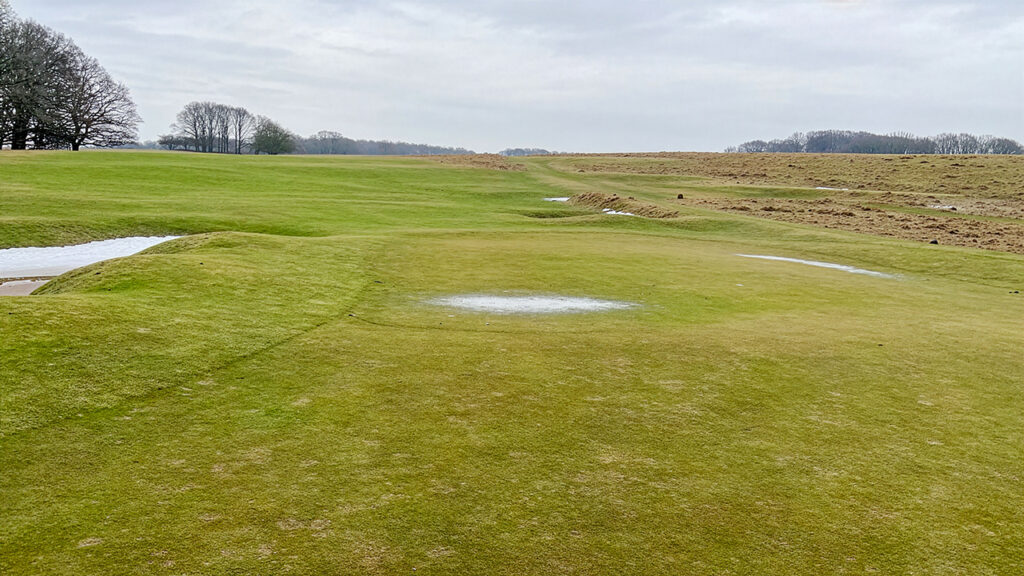
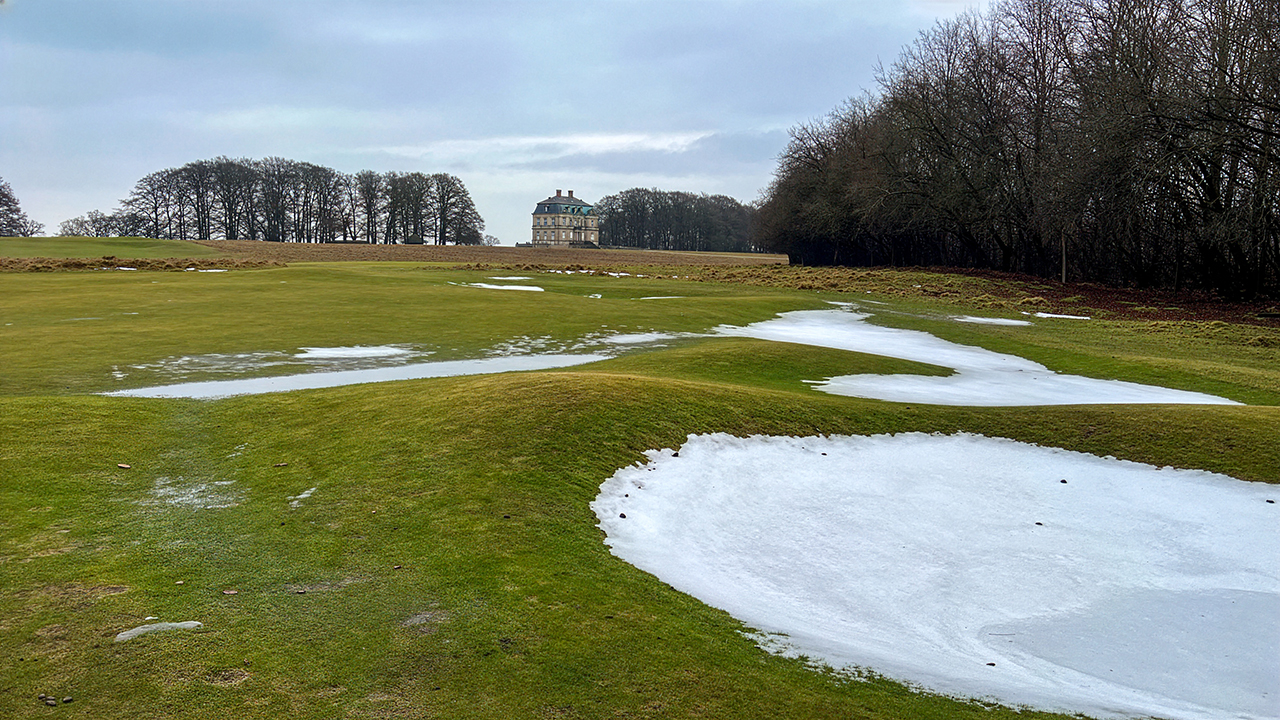
The first course report of the year from the greenkeeper team is ready: Status of the current condition of the course, our work towards a summer opening, and an explanation of why the course is still closed, even though the snow has disappeared..
The condition of the track after winter
The last time we experienced a similar winter was back in 2010. Long periods of hard frost, low temperatures and a thick layer of snow that stayed for several weeks. This type of winter has both advantages and disadvantages for a golf course.
Benefits – fewer pests
The prolonged frost naturally reduces the population of, among other things, the goose beetle and the stilt-leg larvae. These are the very larvae that rooks and jays peck at in the grass and which can cause significant damage to the playing surface. A cold winter is therefore an effective – and free – means of control.
Disadvantages – snow mold and frost damage
As expected, the greens have snow mold. The worst affected are our already challenged greens: 1, 18 and the putting green by the clubhouse.
The plan to get them back to KGK standard consists of:
- Post-seeding
- Top dress
- Heat, light and sun
- Nutrients and targeted care
The work will be started as quickly as we can and given high priority to ensure rapid and healthy regrowth.
Winter closure/track closure – why it is important
Even though the snow is now gone and the grass looks green again, the track is still closed – and there is a good reason for that.
The ground dries out much more slowly than the snow melts. During the transition period, there is often water in and just below the surface that cannot be drained away. If the track is opened too early, we risk:
- Damaged soil structure
- Deep footprints and impact marks
- Slower process towards summer mode
A premature opening will therefore affect the entire season, so patience is crucial now.
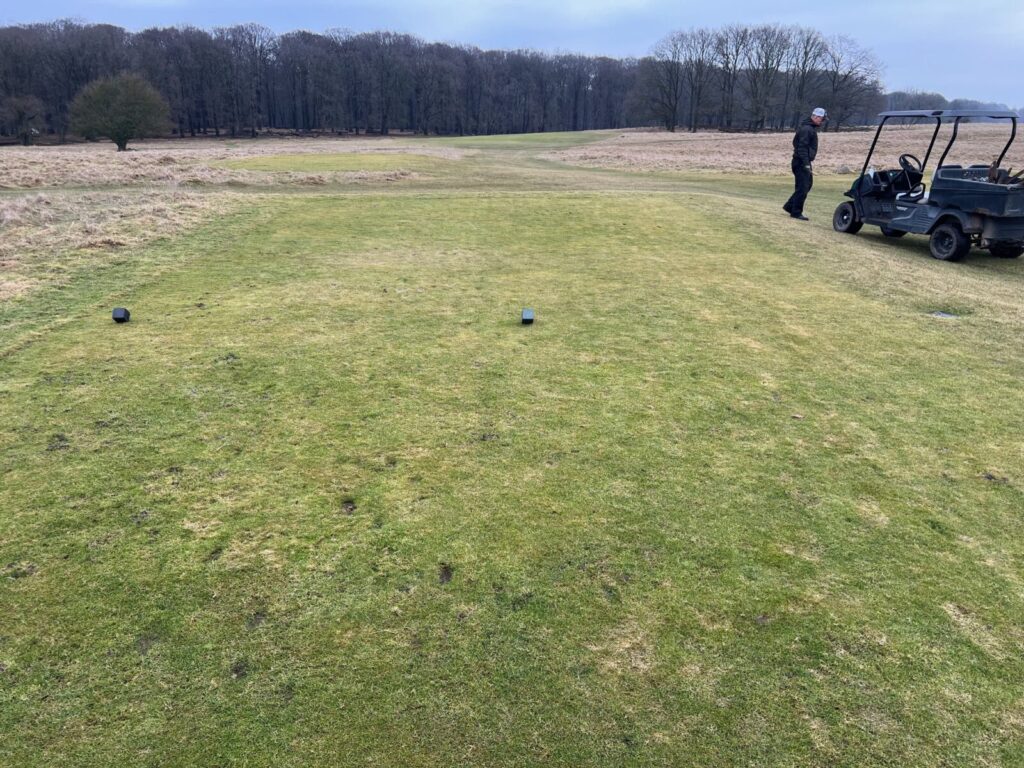
Tees and wear
Fortunately, the long winter closure has meant significantly less wear and tear on the tees. Although there was a lot of play in December, the tees are in significantly better condition (in terms of wear) this year than in previous winters. This gives us a strong and healthy starting point for the coming season.
Focus area in 2026: Bunkers
This year we are putting a special focus on bunker care and bunker presentation. Player1st data shows that the quality of bunkers has been moving in the wrong direction in recent years.
Therefore:
- We are testing new care strategies
- Are we working more focused on consistent quality?
- We prioritize extra time and resources in the bunkers
It is both physically demanding and resource-intensive work – and therefore we would like to send a friendly invitation to all players:
Remember to thoroughly rake the bunker after you. It makes a big difference.
Thank you for your patience.
We are closely following the course's development and are working intensively towards opening as early as possible - without compromising on summer quality. We look forward to welcoming you back to a course that will get the best possible start to the season.
Kind regards,
Nicolai Larsen, Chief Greenkeeper